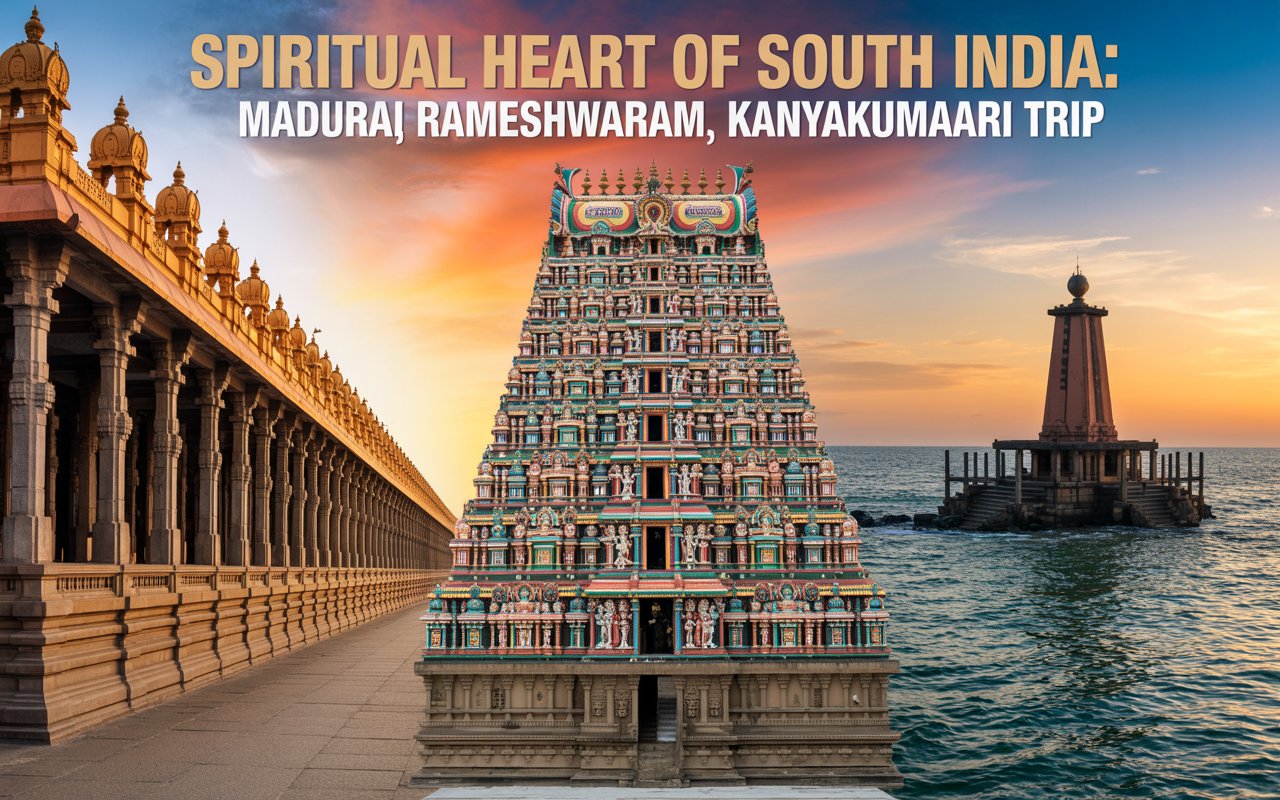
Planning a comprehensive madurai rameshwaram kanyakumari trip requires a deep understanding of the cultural landscape, temple timings, and the logistical flow between these three iconic Tamil Nadu destinations. This circuit is more than just a vacation; it is a pilgrimage through the architectural mastery of the Pandyan dynasty and the sacred coastal rituals of the deep south. To ensure your madurai rameshwaram kanyakumari trip is seamless, travelers must balance the spiritual intensity of Rameshwaram with the bustling bazaar energy of Madurai and the serene horizons of Kanyakumari. From the intricate carvings of the Meenakshi Temple to the sunrise at the confluence of three seas, every mile of this journey offers a unique insight into the religious heritage of India.
Navigating the Temple City of Madurai
Madurai serves as the soul of Tamil culture and is the most logical starting point for your journey. Often called the “Athens of the East,” this city is built around the Meenakshi Amman Temple. When you arrive, the first thing you notice is the towering gopurams that dominate the skyline.
The Meenakshi Temple is an architectural marvel with over 33,000 sculptures. Visitors should ideally plan two visits: one in the early morning to witness the rituals and another in the evening to see the “Palliarai” ceremony, where the idol of Lord Shiva is carried to the chamber of Goddess Meenakshi. The 1,000-pillared hall is another must-visit, housing a museum that showcases the bronze icons and history of the temple.
Beyond the main shrine, the Thirumalai Nayakkar Palace offers a glimpse into the 17th-century royal lifestyle. Its massive white pillars and Italian-influenced architecture provide a stark contrast to the colorful Dravidian style of the temples. For food enthusiasts, Madurai is famous for its “Jigarthanda,” a local cold beverage, and the street food culture that stays active late into the night.
The Sacred Corridors of Rameshwaram
Leaving the inland heat of Madurai, the drive toward the island of Rameshwaram is one of the most beautiful stretches of road in South India. Crossing the Pamban Bridge is a highlight of the journey, offering a panoramic view of the Indian Ocean and the century-old railway bridge running parallel to the road.
Rameshwaram holds a special place in the heart of devotees as it is part of the Char Dham pilgrimage. The Ramanathaswamy Temple is renowned for having the longest temple corridor in the world. Walking through these corridors, lined with intricately painted pillars, is a meditative experience.
A vital part of the ritual here is the “Teerth Snanam.” There are 22 holy wells (theerthams) within the temple complex, and it is customary for pilgrims to bathe in each of them before offering prayers at the main sanctum. The water from each well is said to have different medicinal and spiritual properties. After the temple visit, a trip to Agni Theertham, the beach located just outside the temple, is essential for a holy dip in the sea.
Visiting the Ghost Town of Dhanushkodi
A short drive from the main Rameshwaram town leads to Dhanushkodi, located at the southeastern tip of Pamban Island. Once a flourishing town, it was destroyed during the 1964 cyclone and now stands as a hauntingly beautiful “Ghost Town.”
The road to Dhanushkodi is flanked by the Bay of Bengal on one side and the Indian Ocean on the other. At the very end, known as Arichal Munai, you can stand at the edge of the land where the two seas meet. On clear days, the coast of Sri Lanka is just a few miles away. The ruins of the old church, the railway station, and the post office serve as silent reminders of the town’s past. This area is also significant for the Ram Setu (Adam’s Bridge), the chain of limestone shoals that ancient texts describe as the bridge built by Lord Rama’s army.
Journey to the Land’s End: Kanyakumari
The drive from Rameshwaram to Kanyakumari takes you along the coastal belt, passing through windmills and salt pans. Kanyakumari is the southernmost tip of mainland India, a place where the Arabian Sea, the Bay of Bengal, and the Indian Ocean converge at the “Triveni Sangam.”
The Vivekananda Rock Memorial is the most prominent landmark here. A short ferry ride takes you to the rock where Swami Vivekananda meditated in 1892. Right next to it stands the massive 133-foot stone statue of the Tamil poet Thiruvalluvar. The height of the statue signifies the 133 chapters of his work, the Tirukkural.
The Kanyakumari Devi Temple, dedicated to the virgin goddess, is located on the shore. Legend says the goddess’s nose ring is so bright that it was once mistaken for a lighthouse by sailors. Watching the sunset and the moonrise simultaneously on a full moon day is a rare and spectacular event that draws thousands of tourists to the shoreline.
Ideal Itinerary Planning and Logistics
To cover these three cities comfortably, a minimum of five days is recommended.
- Day 1 & 2: Dedicate these to Madurai. This allows time for the main temple, the palace, and local markets.
- Day 3: Travel to Rameshwaram. Spend the afternoon at the temple and the evening at the Pamban Bridge.
- Day 4: Visit Dhanushkodi in the early morning, then proceed to the APJ Abdul Kalam Memorial before driving toward Kanyakumari.
- Day 5: Experience the sunrise in Kanyakumari, visit the Rock Memorial and the Gandhi Mandapam, and conclude your trip.
The best time to visit is between October and March when the weather is pleasant. Summers can be extremely humid, especially in the coastal areas of Rameshwaram and Kanyakumari. While most people choose to travel by private car for flexibility, the train connectivity between Madurai and Rameshwaram is excellent and offers a unique view of the ocean.
Culinary Traditions of the South
The food across this circuit varies significantly. In Madurai, the cuisine is hearty and meat-heavy in the local mess-style eateries, though temple areas offer excellent vegetarian fare. Look for “Bun Parotta” and “Idiyappam.”
In Rameshwaram, the food is predominantly vegetarian due to the sacred nature of the island, with many “Bhojanalayas” serving simple South Indian thalis. As you reach Kanyakumari, the influence of neighboring Kerala becomes evident. You will find more coconut-based gravies and a variety of seafood dishes. Sampling the local “Nendran” banana chips is a tradition for those traveling through this region.
Cultural Etiquette and Temple Rules
When visiting these historic temples, it is important to follow the dress code. Men are generally expected to wear dhotis or formal trousers, while women should wear sarees or salwar kameez. In the Ramanathaswamy Temple at Rameshwaram, men must remove their shirts to enter the inner sanctum.
Photography is strictly prohibited inside the inner shrines of most temples, though it is allowed in the outer corridors and courtyards. It is also advisable to carry a small bag for your footwear, as the temple complexes are vast and walking barefoot on the stone floors can be challenging during the afternoon heat. Being mindful of these traditions ensures a respectful and smooth experience for everyone involved in the pilgrimage.
Practical Travel Logistics and Packing
Packing for this trip requires light, breathable cotton clothing. Since you will be walking extensively in temple complexes, comfortable slip-on footwear is a necessity. Don’t forget to carry sun protection, as the coastal sun can be quite strong even in the winter months.
If you are flying in, Madurai International Airport is the closest gateway. For the return journey, Kanyakumari is well-connected by rail to major cities like Chennai and Bangalore, or you can drive back to Trivandrum Airport, which is about 90 kilometers away. Pre-booking your accommodation is highly recommended, especially during the festival seasons of Chithirai (Madurai) or Maha Shivaratri (Rameshwaram).
Why This Circuit Remains a Top Choice
The combination of Madurai, Rameshwaram, and Kanyakumari offers a perfect blend of history, spirituality, and natural beauty. It caters to the devout pilgrim, the history buff, and the nature lover alike. Whether it is the grand architecture of the Nayaks, the mythological significance of the Ramayana, or the simple joy of watching the sea at the end of the world, this journey stays with you long after it ends.
Choosing a professional guide at the Meenakshi Temple or the Rameshwaram temple can enhance the experience, as they explain the hidden symbolism in the carvings and the legends behind the rituals. This adds a layer of depth that goes beyond just sightseeing, turning a simple vacation into a profound learning experience about India’s living heritage.
Conclusion and Further Spiritual Travels
This journey across the southern tip of India provides a deep sense of peace and a connection to ancient traditions. Taking a madurai rameshwaram kanyakumari trip allows you to see the vibrant colors of life and the quietude of devotion in one single loop. Many travelers who complete this southern circuit often find themselves inspired to look toward other major spiritual milestones across the country. If you have found solace in these coastal and temple towns, you might eventually consider a comprehensive tour package for 12 jyotirlinga to witness the diverse manifestations of Lord Shiva across India. Each destination in the south prepares you for the grandeur of India’s wider spiritual geography, ensuring that the memories of the gopurams and the waves remain vivid. By planning ahead and respecting local customs, your journey through Tamil Nadu will be a highlight of your travel experiences.