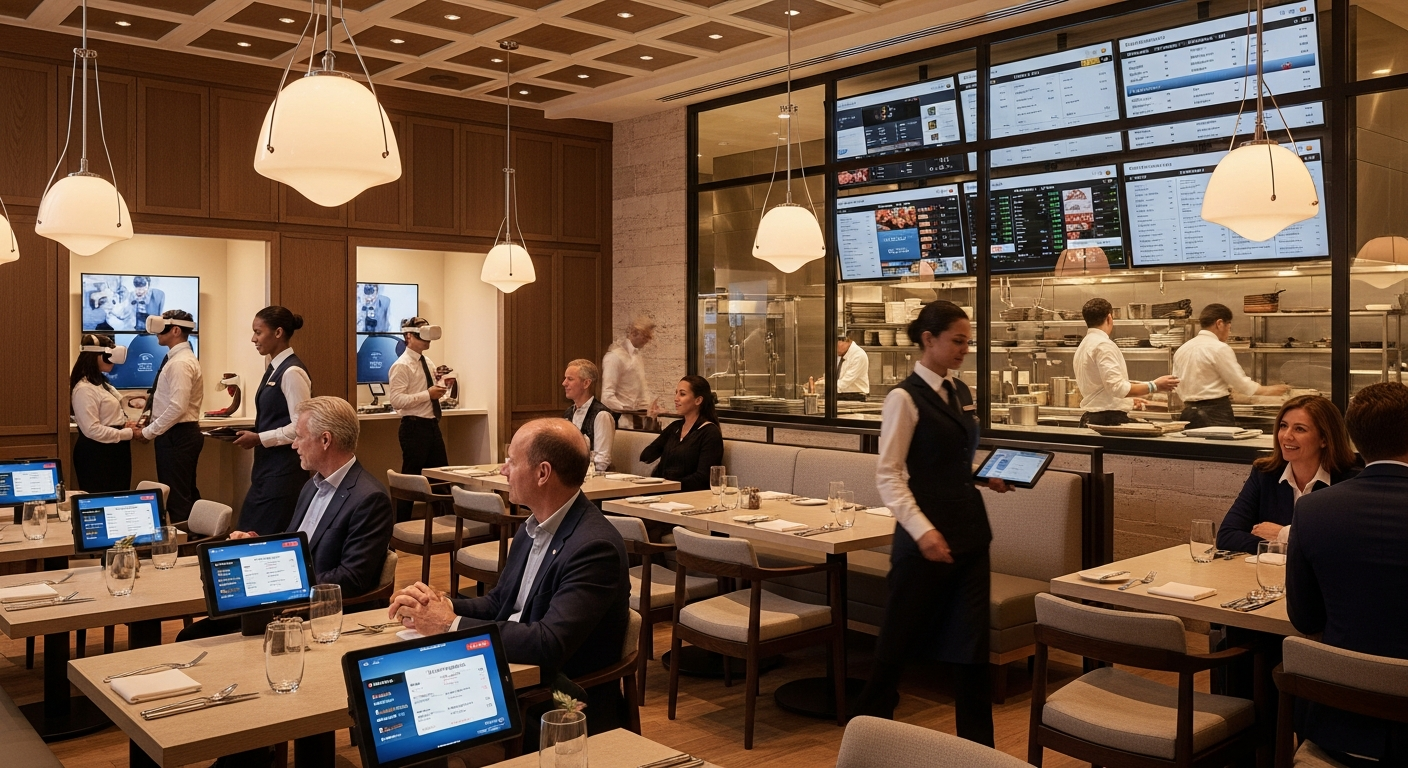
Walk into any successful restaurant and you’ll notice something different. The hostess checks your reservation on a sleek tablet. Your server takes orders on a mobile device that instantly sends details to the kitchen. Behind the scenes, staff members complete their certification training through interactive digital modules.
This isn’t the future — it’s happening right now. The hospitality industry has embraced digital transformation with remarkable speed, creating smarter operations that benefit both businesses and customers. From automated inventory management to AI-powered scheduling systems, restaurants are discovering that the right technology doesn’t replace human connection — it enhances it.
But here’s what’s really exciting: the most successful establishments aren’t just adopting random tech solutions. They’re strategically implementing integrated systems that work together to create seamless experiences.
Smart Training Platforms Transform Staff Development
Gone are the days of shadowing experienced servers for weeks on end. Digital training platforms have revolutionized how restaurants onboard and develop their teams. These systems offer interactive modules covering everything from food safety protocols to customer service techniques.
I’ve seen firsthand how these platforms accelerate learning curves. New hires can complete certification requirements at their own pace, reviewing complex procedures multiple times if needed. The gamification elements (progress bars, achievement badges, leaderboards) keep staff engaged throughout the process.
Restaurant chains particularly benefit from standardized training content. A server in Chicago receives identical instruction to one in Miami, ensuring consistent service standards across all locations. The National Restaurant Association Educational Foundation has documented significant improvements in staff retention when digital training programs are properly implemented.
For alcohol service certification, establishments can now streamline the entire process. Staff members complete their smart serve test requirements through digital platforms that offer immediate results and automated record-keeping. This eliminates the paperwork hassles that once bogged down HR departments.
AI-Powered Operations Streamline Daily Tasks
Artificial intelligence has moved beyond buzzword status to become a practical tool for restaurant operations. Smart scheduling systems analyze historical data to predict busy periods, automatically adjusting staff levels to match anticipated demand. No more guesswork — just data-driven decisions.
Inventory management represents another area where AI shines. These systems track usage patterns, predict when supplies will run low, and automatically generate purchase orders. Some advanced platforms even factor in weather forecasts and local events to adjust inventory predictions.
Kitchen display systems have replaced the chaotic world of paper tickets. Orders appear on screens with color-coded timing indicators, helping chefs prioritize preparation sequences. When integrated with point-of-sale systems, these displays can automatically adjust cook times based on table turnover patterns.
The U.S. Small Business Administration emphasizes how automated compliance tracking helps restaurants maintain proper documentation for health inspections and labor law requirements.
Customer Experience Enhancement Through Digital Integration
Technology’s impact extends far beyond back-of-house operations. Customer-facing innovations are reshaping dining experiences in remarkable ways. QR code menus became mainstream during recent health concerns, but they’ve evolved into sophisticated ordering platforms.
Guests can now browse detailed ingredient lists, view nutritional information, and customize orders without flagging down busy servers. Payment processing happens seamlessly through these same systems, reducing wait times and improving table turnover rates.
Tabletop tablets offer entertainment options while customers wait for their meals. These devices can suggest wine pairings, display chef recommendations, or even allow diners to split bills among multiple payment methods. The convenience factor has proven so popular that many restaurants report increased customer satisfaction scores.
Loyalty programs have also gone digital. Instead of carrying physical cards, customers link their phone numbers or email addresses to receive automatic rewards. These systems track purchasing patterns and send personalized offers that encourage return visits.
Compliance and Safety in the Digital Age
Restaurant compliance has transformed dramatically with digital solutions. Temperature monitoring systems now send alerts directly to managers’ phones when walk-in coolers deviate from safe ranges. This proactive approach prevents spoilage and reduces food safety risks.
Employee scheduling platforms automatically flag potential overtime situations and ensure adequate break coverage. They can even verify that certified staff members are scheduled for specific shifts that require particular qualifications.
The Occupational Safety and Health Administration recognizes digital training records as valid documentation during inspections, provided they meet specific requirements for completion tracking and content verification.
Smart cameras equipped with AI can monitor hand-washing compliance, alerting managers when protocols aren’t followed. While some staff initially resist this level of oversight, most appreciate the protection it provides against liability issues.
Here’s the thing: technology works best when it supports existing processes rather than completely replacing them. The most successful restaurants use digital tools to enhance their teams’ capabilities, not eliminate human judgment and creativity.
Looking Forward: Integration and Innovation
The restaurant technology landscape continues evolving rapidly. Voice-activated ordering systems are being tested in drive-through locations. Robotic food preparation equipment handles repetitive tasks while human chefs focus on creative aspects.
Cloud-based management systems allow owners to monitor multiple locations from anywhere with internet access. Real-time sales data, staff performance metrics, and customer feedback all flow into centralized dashboards that enable quick decision-making.
But perhaps the most significant trend is integration. Rather than using dozens of standalone applications, successful restaurants are choosing platforms that connect seamlessly. When your POS system talks to your inventory management software, which connects to your scheduling platform, the result is smooth operations that require minimal manual intervention.
The key lies in choosing solutions that enhance rather than complicate existing workflows. Technology should make staff jobs easier, not create additional hurdles. When implemented thoughtfully, these digital innovations create competitive advantages that translate directly into improved profitability and customer satisfaction.
Restaurants that embrace this digital transformation while maintaining their unique character and hospitality standards will find themselves well-positioned for continued success. The future belongs to establishments that blend cutting-edge technology with timeless service values.